Kirby’s dream to move back to her own home was the focus of her NDIS planning. Kirby moved out of the nursing home into her parents’ home. Since this move, Kirby’s physical recovery has progressed significantly. Aside from ongoing physical recovery, Kirby’s goals include moving out of her parents’ home and living independently.
Region: Australia
Bree’s Story- My own home
Bree moved to her own home after years of transitioning between institutional respite centres.
IAC Report Pathway to Innovative and Contemporary Options of Housing and Support
This report explores how the NDIS can promote contemporary approaches to housing and support to enable better outcomes for participants. The prevailing models observed in states and territories is of a traditional nature with housing and support linked, and residents having to move house if they are unhappy with the support. The research presented in this paper will provide evidence that more contemporary approaches are needed to facilitate positive outcomes for participants, and encourage sustainability of the Scheme.
Scott and Daniel Harry’s Story
Scott and Daniel Harry are living their lives as they want, they are taking full advantage of the national disability insurance scheme. They arrange all their own support and lead a free and very social life, the way they want to be.
The Lives We Lead – Immy
Disability Rights Now Shadow Report 2019
Australian Civil Society Shadow Report to the United Nations Committee on the Rights of Persons with Disabilities: UN CRPD Review 2019 In response to the List of issues prior to the submission of the combined second and third periodic reports of Australia.
Homesharing – My Place
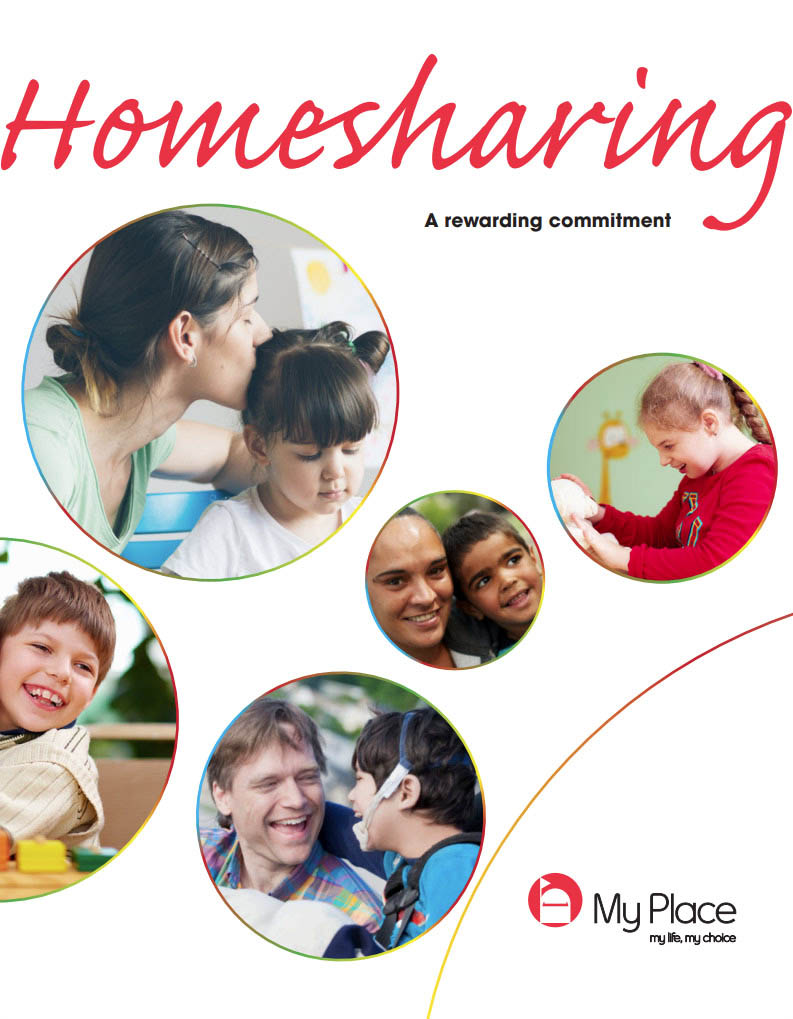
My Place supports people with disability to live in their own homes, to remain in their family home or to move in with another family. My Place has a long history of supporting children with disability, including those in the care of the Department of Child Protection and Family Services, in homesharer arrangements. Many of these children are now adults. Some have remained living with their homesharer families while others have successfully moved into their own homes with ongoing support from My Place. This continuity of support as children move into adulthood has proven to be crucial in many cases to a smooth and successful transition.
My Place – The Home Automation Project
Adaptable Housing for People with Disability in Australia: A Scoping Study
The primary aim of the report is to consider the applicability and replicability of established design informed approaches for flexibility and adaptation that have been successfully employed in other contexts (such as the home office or housing for multi-generational families) to retrofitting housing for people with disability, which would also benefit the whole community. Such an approach goes beyond function and accessibility to consider the qualities that create a dignity-enabling home environment.
Curtin Individual Supported Living Manual 2nd Edition
Individual Supported Living (ISL) goes beyond accommodation for persons with disabilities to
the creation of homes that are based on universally valued principles of what makes a home for
each person. Homes are where we live, develop, pursue our interests, and foster relationships.
A person’s home is the foundation for ISL. The Themes of ISL describe what is needed to create
and maintain a home for a person with disabilities. These Themes have been developed and
explored in three consecutive research projects since 2007. They are the foundation of the ISL
Framework and this Manual. As a comprehensive Framework, ISL is particularly relevant for
persons with significant daily living limitations or who may require substantial support in daily life.