Region: European Union
Deinstitutionalisation and community living outcomes and costs: Report of a European Study
Volume 3 Country Reports: These country reports form the third volume of the final report from the European Union Project Deinstitutionalisation and community living – outcomes and costs: report of a European Study. There are 28 country reports included. For the most part, the reports have been written by the researchers and in some cases the experts in each of the partner institutions, using a variety of sources, including government policy, web-based documents, statistical reports and academic papers.
From Institution to Community Living
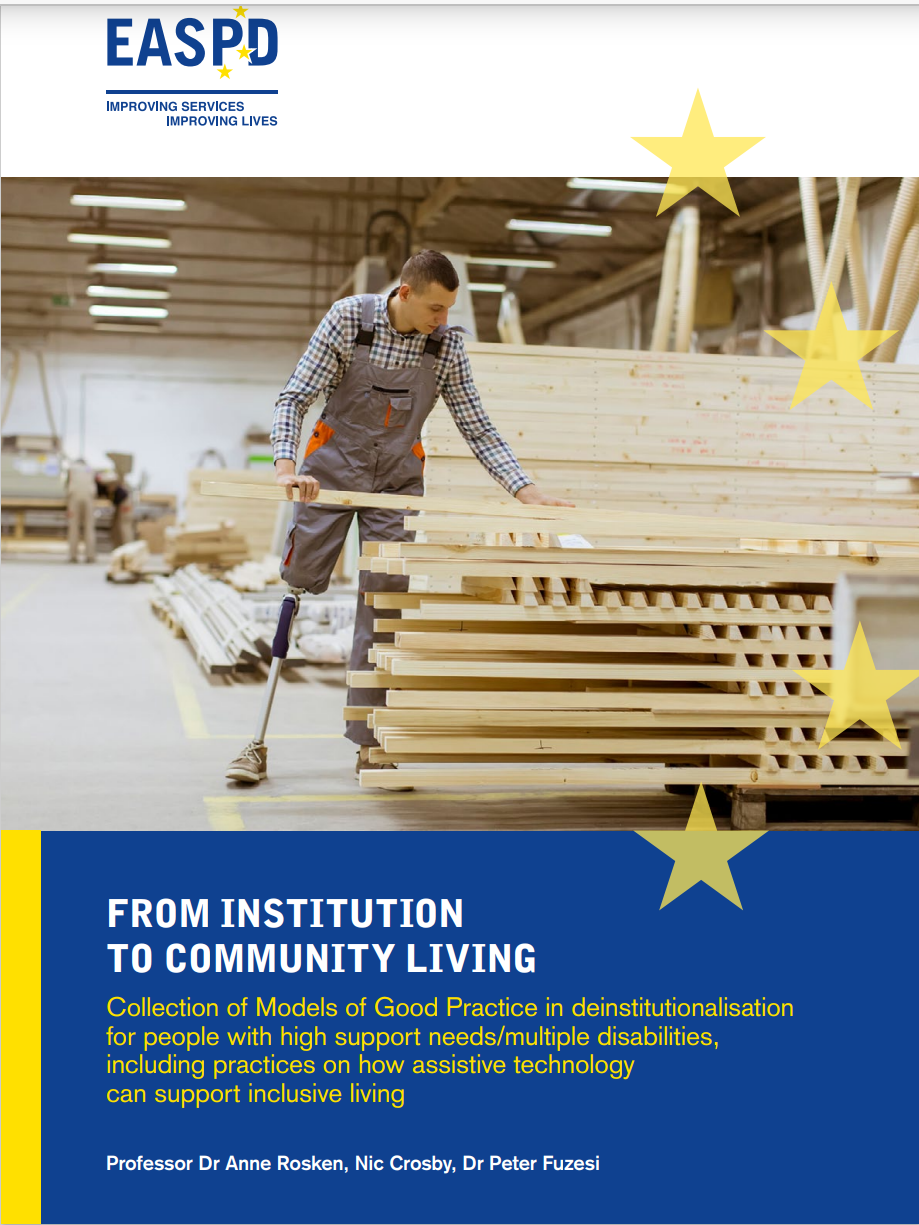
The work centres on identifying five case studies from across the European region where an institution for people with disabilities including those with high/complex support needs, has been completely closed. The case studies span almost fifty years of time and work; in the view of the project team this provides a useful timeline that identifies how each has learned from the experience of the previous work and built an ever stronger and evidence informed approach to complete closure.
From the radicals setting out to close the institution in Trieste, led by Franco Basaglia, to the detailed and strategic approach in Moldova, each case study provides a good sense of the work needed and what it takes to
succeed in completely closing an institution for people with disabilities.
Deinstitutionalisation and community living – outcomes and costs: Report of a European Study.
Volume 1 Executive Summary: This project aimed to bring together the available information on the number of disabled people living in residential institutions in 28 European countries, and to identify successful strategies for replacing institutions with community-based services, paying particular attention to economic issues in the transition. It is the most wide-ranging study of its kind ever undertaken.
The concept of language of trust and trustworthiness: (Why) history matters
This paper puts forward the argument that the concept of the language of trust and trustworthiness can be a useful way of understanding what trust means in specific situations. This concept refers to linguistic devices – verbal and non-verbal – which purposefully convey trust and create a foundation for continuing or improving relations.
Self-Determination: Theory of Motivation
This article explores Self Determination Theory and why intrinsic motivation matters.
Deinstitutionalisation Strategy in Greece

This document describes the main priorities of the national deinstitutionalisation strategy for Greece. The social care reforms which are referred to in the document are particularly aimed at promoting and developing sound legal and financial frameworks addressing specifically the needs of the following target groups: children, children with disabilities, adults with disabilities and elderly; however, the outcomes of a more comprehensive, inclusive social protection system will be beneficial to all persons that may have support needs throughout their lives.